Cell Phone Repair: Hardware, Trends, Sustainability, Security
By Peter Alkema
Mobile-device repair takes place within a wider system of hardware design, parts, service and data.
$79.00 Buy this course
- Format
- Course
- Lessons
- 101
- License
- PLR
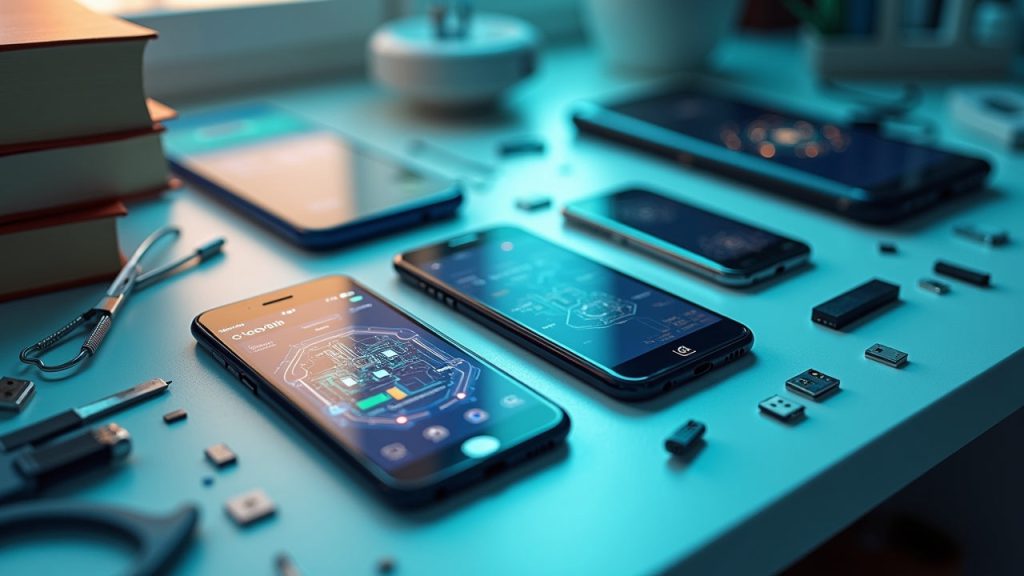
What's in the PLR package
- Understanding Cell Phone Repair_ Device Architectu_30648794-c33f-43de-a645-d793d1874b47.zip 3.3 GB
Download links unlock in your account right after purchase.
Curriculum
- Lesson: The Origins and Rapid Evolution of Mobile Phones I
- Lesson: How smartphones became central to communication and productivity
- Lesson: Transition from simple phones to highly integrated smart devices
- Lesson: Increasing consumer dependence on reliable mobile devices
- Lesson: Real-life impact of mobile phone innovations on businesses and individuals
- Lesson: Overview of smartphone hardware layers and internal structures
- Lesson: Role of displays, batteries, processors, and memory in device operation
- Lesson: Sensors and radios: enabling communications and unique features
Show 93 more
- Lesson: Why component miniaturization drives modern device trends
- Lesson: Case study: Comparison of early versus modern smartphone designs
- Lesson: Design challenges in integrating components into slim form factors
- Lesson: Balancing performance, usability, and repair complexity in device assembly
- Lesson: How thermal management shapes hardware integration strategies
- Lesson: Impact of water and dust resistance requirements on repairability
- Lesson: Examples of device teardowns revealing integration trade-offs
- Lesson: Display technologies: OLED, LCD, and the evolution of smartphone screens
- Lesson: Why displays are prone to shattering and image degradation
- Lesson: Common causes of touchscreen malfunctions and display flickering
- Lesson: Design versus repairability: laminated screens and accessibility
- Lesson: Case studies of display failures and the economics of replacement
- Lesson: Batteries: chemistry, operation, and the quest for longer life
- Lesson: Power delivery design and risks of electrical failures or overheating
- Lesson: How charging habits contribute to battery degradation over time
- Lesson: When and why batteries swell�safety and environmental concerns
- Lesson: Case analysis: Industry responses to battery recall crises
- Lesson: Role of processors and memory modules in overall device architecture
- Lesson: Why high-density logic boards complicate troubleshooting and repair
- Lesson: Typical logic board failure patterns and their root causes
- Lesson: Thermal stress and soldering issues seen in compact mobile devices
- Lesson: Real-life outcomes: Salvaging data and reusing components after board failure
- Lesson: The critical role of radios and antennas in communication functions
- Lesson: Signal loss and physical damage�why connectivity sometimes fails
- Lesson: Water damage and corrosion risks specific to connectivity modules
- Lesson: Evolution of 5G and its impact on repair complexity and integration
- Lesson: Case study: Identifying and resolving recurring wireless connectivity failures
- Lesson: Types of sensors enabling navigation, biometrics, and context awareness
- Lesson: Design trade-offs when integrating cameras, microphones, and buttons
- Lesson: Failure patterns: Dust ingress, misalignment, and sensor drift
- Lesson: Cases where sensors drive up repair costs or complexity
- Lesson: Impact of emerging sensor technologies on future repair strategies
- Lesson: What ingress protection means and how it is achieved in modern devices
- Lesson: Design features Providing water and dust resistance
- Lesson: Trade-offs between protection and ease of disassembly for repairs
- Lesson: Common points of failure compromising ingress protection standards
- Lesson: Case examples: Water-damaged phones and outcomes of warranty inspections
- Lesson: Overview of failure categories: Power, display, connectors, and logic boards
- Lesson: Why certain failures recur more frequently than others in real-world settings
- Lesson: Stress-testing and identifying design weaknesses in leading brands
- Lesson: How usage patterns and accidents affect the likelihood of failures
- Lesson: Statistics and case data: Correlating component design with failure rates
- Lesson: How environmental factors like heat, cold, humidity, and dust affect devices
- Lesson: Physical stress, drops, and their cumulative impact over a phone s lifecycle
- Lesson: Consequences of poor maintenance or incompatible accessories
- Lesson: Variability in failure patterns by climate, region, and user profile
- Lesson: Case study analysis: Extreme environments and phone performance outcomes
- Lesson: Definition and significance of repairability as a design consideration
- Lesson: Industry initiatives to balance device robustness and repair access
- Lesson: Consumer advocacy: Influencing the shift toward more repairable devices
- Lesson: Role of tear-down scores and independent evaluations in shaping perceptions
- Lesson: Case review: Market responses to deliberately sealed or glue-heavy devices
- Lesson: How authorized service networks operate and enforce manufacturer policies
- Lesson: Roles and incentives for independent technicians and third-party shops
- Lesson: Interplay between warranty, genuine parts, and profit margins in repairs
- Lesson: Success stories and challenges for independent repair communities
- Lesson: Case perspectives: Differing repair costs and outcomes by service provider
- Lesson: Key regulations affecting device repair and aftermarket parts
- Lesson: Evolution of international standards on device accessibility and maintenance
- Lesson: Influence of right-to-repair activism on government and manufacturer policies
- Lesson: Impact of policy changes for small businesses and consumer choice
- Lesson: Global case studies: Countries leading the right-to-repair movement
- Lesson: E-waste problem: How device longevity impacts sustainability
- Lesson: Environmental trade-offs of repair, refurbishment, and recycling options
- Lesson: Manufacturer accountability and circular economy concepts in tech
- Lesson: Analyzing the carbon footprint of creating and maintaining smartphones
- Lesson: Success stories: Reducing waste through extended phone lifecycles
- Lesson: Risks of data breach during device disassembly or transfer of ownership
- Lesson: How manufacturers and repair shops address privacy and security concerns
- Lesson: Best practices for safeguarding user information prior to repairs
- Lesson: Consequences of improper data handling in real-life repair incidents
- Lesson: The growing market for secure, privacy-respecting repair solutions
- Lesson: How global supply chains source spare parts for repairs around the world
- Lesson: Risks introduced by counterfeit, non-genuine, or variable-quality components
- Lesson: Economic and logistical realities shaping part availability by region
- Lesson: Case examination: Bottlenecks and supply disruptions affecting repair flows
- Lesson: Strategies adopted by successful repair networks for resilient sourcing
- Lesson: How repair quality and post-repair testing determine consumer satisfaction
- Lesson: Industry benchmarks for quality assessment after component replacement
- Lesson: Challenges: Incomplete repairs, repeat failures, and warranty disputes
- Lesson: Case studies: Building or losing consumer trust in the repair process
- Lesson: Models for transparency, reviews, and certification in repair services
- Lesson: Anticipating future forms of device integration and component standardization
- Lesson: How modular design may shape repair practices in the coming years
- Lesson: Potential regulatory shifts and their influence on repair accessibility
- Lesson: Growing importance of sustainability and environmental impact in repair
- Lesson: Visionary case examples: Experimenting with biodegradable or reusable parts
- Lesson: Review of key concepts and their interconnections across device repair
- Lesson: The evolving social, economic, and ecological significance of repair
- Lesson: How changing repair cultures may influence technology adoption patterns
- Lesson: Reflections on potential opportunities and careers within the repair sector
- Lesson: Final thoughts: Resilient technology ecosystems supporting global sustainability
- Lesson: Resources
About this course
Mobile-device repair takes place within a wider system of hardware design, parts, service and data. This course examines that context for learners exploring repairability and the mobile-repair ecosystem.
Displays, batteries, processors and connectivity provide the component foundation. Miniaturization and integration then connect the design of a device with the options available when something fails.
Consider the failure and the service around it
Logic boards, sensors and environmental damage are discussed alongside authorized and independent repair models. Parts supply, warranties and service quality introduce the commercial and operational context.
Data privacy, refurbishment and e-waste broaden the material beyond fixing an individual device. These themes connect repair with the responsibilities around information and the device lifecycle.
The course provides awareness of the field and its system-level questions. Device-specific practical work requires the appropriate procedures and training.
Use PLR for repair-awareness education
With PLR, you can modify, rebrand and resell the course. You could tailor it for an introductory repair-business offer or place it within a broader technology-lifecycle curriculum. Your own device and service examples can make the discussion more specific to your audience.
License rights
| Right | PLR |
|---|---|
| Selling the course | |
| Product may be sold separately | YES |
| Product may be bundled with other products | YES |
| Product can be a bonus for another product | YES |
| Can be sold as a physical product | YES |
| Can be sold as a digital product | YES |
| Passing on rights | |
| Can offer Resale Rights | NO |
| Can offer Master Resale Rights | NO |
| Can offer Private Label Rights | NO |
Show all 23 rights Show fewer rights
| Right | PLR |
|---|---|
| Memberships, bonuses and lists | |
| Can be added to paid membership sites | YES |
| Can add bonuses to the Product for sale | YES |
| Can be used to build a list | YES |
| Rebranding and editing | |
| You may put your own name on the sales letter | YES |
| You may rename the product | YES |
| You may edit the sales material | YES |
| You may edit the content of the product | YES |
| You may use the source code/material to create new products | YES |
| You may use the name(s) of the author/creator/seller of the Product | YES |
| Can translate the course into other languages | YES |
| Not allowed with any license | |
| Can be used for YouTube or other free video sites | NO |
| Can be added to free membership sites | NO |
| Can be given away for free | NO |
| Can be used or sold on Uthena | NO |
| Can be used or sold on Soofos, Udemy, Skillshare or other course marketplaces you don't own | NO |
Questions
What do I receive with a PLR or MRR license?
Downloadable package available: the complete course comes as files you download. The lessons are listed below; their online videos are still being added. PLR and MRR include a license key. Sales copy, editable formats and extras depend on the supplied package; check the listed contents.
What does lifetime access mean?
You can follow the course online for as long as it is available on Uthena. Downloadable files are guaranteed for 12 months from your purchase, so download them and keep your own copy.
Can I cancel my order?
Yes, within 7 days of your purchase: request a refund from your Uthena account. After 7 days an order can no longer be cancelled.
What if I want to speak to someone?
Email info@uthena.com, or support@uthena.com about an order, or use the contact form. We reply within two business days.
Related courses
-
Educational Courses -
Educational Courses Intro to LLM Security – OWASP Top 10 for Large Language Models
Joseph Holbrook from $69.00 PLR -
Educational Courses Certified Strategic Generative AI Professional (CSGAIP) Crash Course
Joseph Holbrook from $159.00 PLR -
Educational Courses General Data Protection Regulation GDPR for the Workplace
Joseph Holbrook from $69.00 PLR